
Burglar-Proof Windows: How to Increase the Security of the First Floor

August 24, 2026
“My villa is in a gated community with a guard at the gate. Nobody is going to bother with my windows.”
Ground-floor windows are the single most attacked entry point in UAE homes. Dubai Police statistics released through local media have repeatedly shown that opportunistic burglaries spike during long summer travel periods, when families leave for Europe or the subcontinent and villas stand empty for weeks. The intruder rarely picks the front door. They walk the perimeter, find a rear window in a quiet corner, and take two minutes with a crowbar.
The problem is that most homeowners have absorbed a mix of half-truths about what actually keeps a window shut. This guide walks through the five most common myths, one at a time, and replaces them with what genuinely works on a villa in Jumeirah, an apartment in Sharjah, or a compound house in Abu Dhabi.
Myth 1
Myth: Standard double glazing is already burglar-proof
Double glazing is designed for thermal insulation and noise reduction, not impact resistance. Two thin panes of annealed glass with an air gap between them shatter almost as easily as a single pane. A hooded intruder with a centre-punch or a small hammer can defeat a standard sealed unit in under thirty seconds, which is exactly what we see in the CCTV clips the police release each summer.
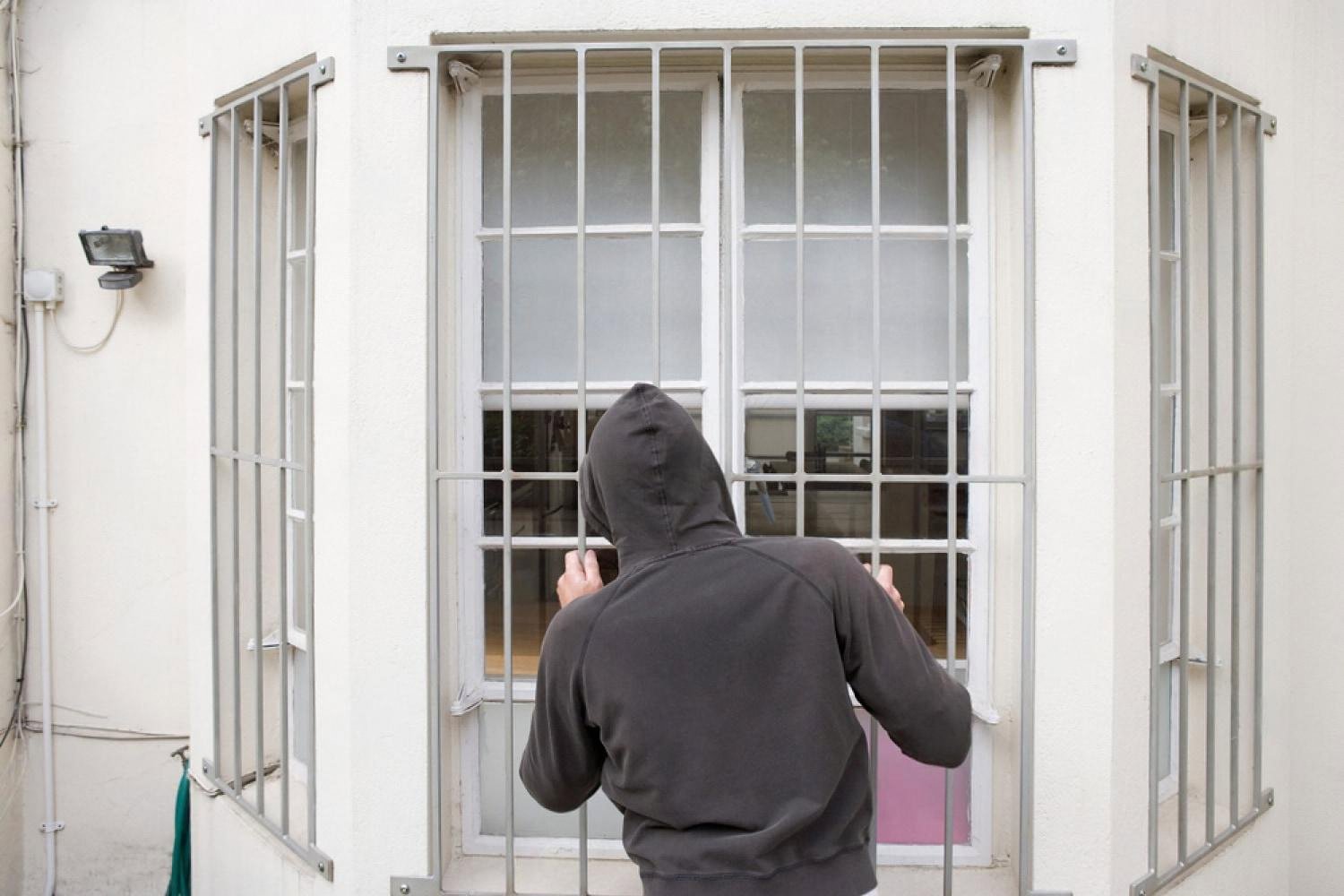
Reality: what you want is laminated security glassideally P4A or higher under the EN 356 standard. Laminated glass sandwiches a tough PVB or SentryGlas interlayer between panes. When struck, it cracks but holds together, and the intruder is left banging on a spider-webbed sheet that refuses to open a hole. Combined with a second insulating pane, you get both thermal performance and forced-entry resistance in one unit.
Myth 2
Myth: Plastic (uPVC) frames are strong enough
uPVC is popular in UAE new-builds because it is cheap, insulates well, and shrugs off humidity. What it does not do is resist a determined pry attack. The typical failure point is not the glass at all, it is the sash meeting the frame. A crowbar levered into that gap warps the plastic profile until the locking cam pops free.
Reality: for ground-floor openings, choose a reinforced aluminium or steel frame with a multi-point locking system, mushroom-head cams, and anti-lift blocks. According to a Wikipedia summary of burglary research most residential intruders abandon an attack that takes more than three to five minutes. A properly anchored metal frame buys you exactly that time budget.
Myth 3
Reality check: Decorative grilles are not the same as security bars
Drive through Al Barsha or Mirdif and you will see hundreds of villas with wrought-iron grilles on the ground floor. Many of them are purely ornamental. The bars are 8 mm thick, welded at surface joints, and bolted into the plaster rather than into the structural blockwork behind it. A pair of grips and a battery angle grinder makes short work of them.
Security-rated bars are a different product. They use 16 mm or thicker solid rod, hardened where the cutting disc would bite, and anchor into the concrete lintel and sill with expansion bolts at least 100 mm deep. The vertical spacing is tight enough that a child cannot squeeze through, but the bars themselves must be certified against attack tools, not just against the weather.
- Ask for the manufacturer’s test certificate against EN 1627 resistance class RC2 or higher.
- Insist on internal-release mechanisms so bedrooms remain fire-safe.
- Check that anchor points sit in structural concrete, not just render.
Myth 4
Myth: An alarm system alone will scare intruders off
A loud siren is useful, but on its own it is background noise in a busy compound where car alarms trigger on the hour. What actually shortens an intrusion is a monitored system that pushes an alert to a manned control room and to your phone at the same instant a window contact breaks or the glass sensor detects breaking-frequency vibrations.
Reality: pair the physical window with electronics. Magnetic reed switches on every ground-floor sash, glass-break acoustic sensors tuned to the frequency of laminated glass, and a small internal siren connected to a 24/7 monitoring centre in the UAE. Response teams in Dubai and Abu Dhabi can typically dispatch to a verified alarm inside ten to fifteen minutes, and the operator can trigger a Dubai Police call on your behalf. For valuables you can’t relocate, a monitored zone that includes your safes in Dubai gives you a layered response rather than a single point of failure.
Myth 5
Reality: The installer matters as much as the product
A P5A laminated pane in a certified steel frame fitted by an unqualified handyman is not a security window, it is an expensive piece of glass. The seams where the frame meets the wall, the depth of the fixings, the sealant used against Gulf humidity, and the way the reveals (откосы) are packed with mortar rather than foam, all decide whether the assembly holds up to attack.
Work only with companies that hold civil-defence approval in the emirate where you live, that can show completed projects at similar villa types, and that provide a written warranty covering both the product and the workmanship. Ask to see the fixings before the reveals are closed up. Any reputable installer will welcome the inspection.
The most expensive myth of all
The costliest belief is that security is a single purchase. It is a layered system: glass, frame, locking hardware, alarm, monitoring, and installation quality. Skip one layer and the others lose most of their value. Budget for the whole stack, or wait until you can, because a half-finished upgrade gives you a false sense of safety that is often worse than the original window.
Frequently asked questions
How much do burglar-proof windows cost per square metre in the UAE?
Prices vary widely with specification, but as a rough guide a laminated double-glazed unit in a reinforced aluminium frame typically runs several times the cost of a standard uPVC window. Add certified security bars and a monitored alarm and the total for a ground-floor villa can reach a meaningful five-figure dirham sum.
Always request a fully itemised quote covering glass class, frame profile, hardware brand, fixings, and installation labour separately.
Are security bars legal on villa windows in Dubai?
Yes, external bars are permitted on private villas in most communities, but many gated developments and master-planned areas have community rules about visible external fittings. Check with your community management or master developer before ordering.
Civil Defence also requires that bedroom bars include an internal quick-release mechanism so occupants can escape during a fire.
Can I retrofit laminated security glass into existing uPVC frames?
Sometimes. Laminated units are heavier than standard glass and thicker, so the existing sash rebate and hinges may not accept them. A professional survey is essential.
In most UAE villas built in the last decade, retrofitting into original frames gives only a partial upgrade. Replacing both the glass and the frame together produces a properly rated assembly.
Do window sensors work with the alarm system already installed by my developer?
Developer-supplied alarms in UAE villas are usually wired to the front door and a few motion sensors, not to every window. Most systems can be extended with additional wired or wireless contacts, provided the panel supports enough zones.
If the original panel is more than eight or ten years old, replacing the head unit with a modern IP-connected panel is often cheaper than trying to expand the old one.
How long does a full ground-floor window upgrade take?
For a typical four-bedroom villa, survey and manufacture usually take three to five weeks because laminated units are made to order. Actual installation on site is normally completed in two to four working days.
Alarm integration and commissioning add another day, plus a walk-through with the monitoring centre to test each zone.
Is it worth doing only the rear windows and ignoring the front?
Rear and side windows are attacked far more often than front-facing ones, so prioritising them is sensible. However, if the front elevation includes low windows screened by landscaping or a boundary wall, treat those with the same priority as the rear.
Walk the perimeter after dark and note every window that cannot be seen from the street or from a neighbour’s house. Those are the ones to harden first.
Baseball fan, foodie, record lover, Eames fan and storyteller. Producing at the crossroads of beauty and purpose to craft meaningful ideas that endure. German award-winning designer raised in Austria & currently living in New York City.